Missed social cues in children can sometimes look like rudeness, disinterest, or even rejection. But what if a child simply doesn’t notice that someone is trying to connect with them?
During one of our recent social groups at the Peter Pan Center, I watched a small interaction that perfectly illustrated how easily a friendship opportunity can slip away.
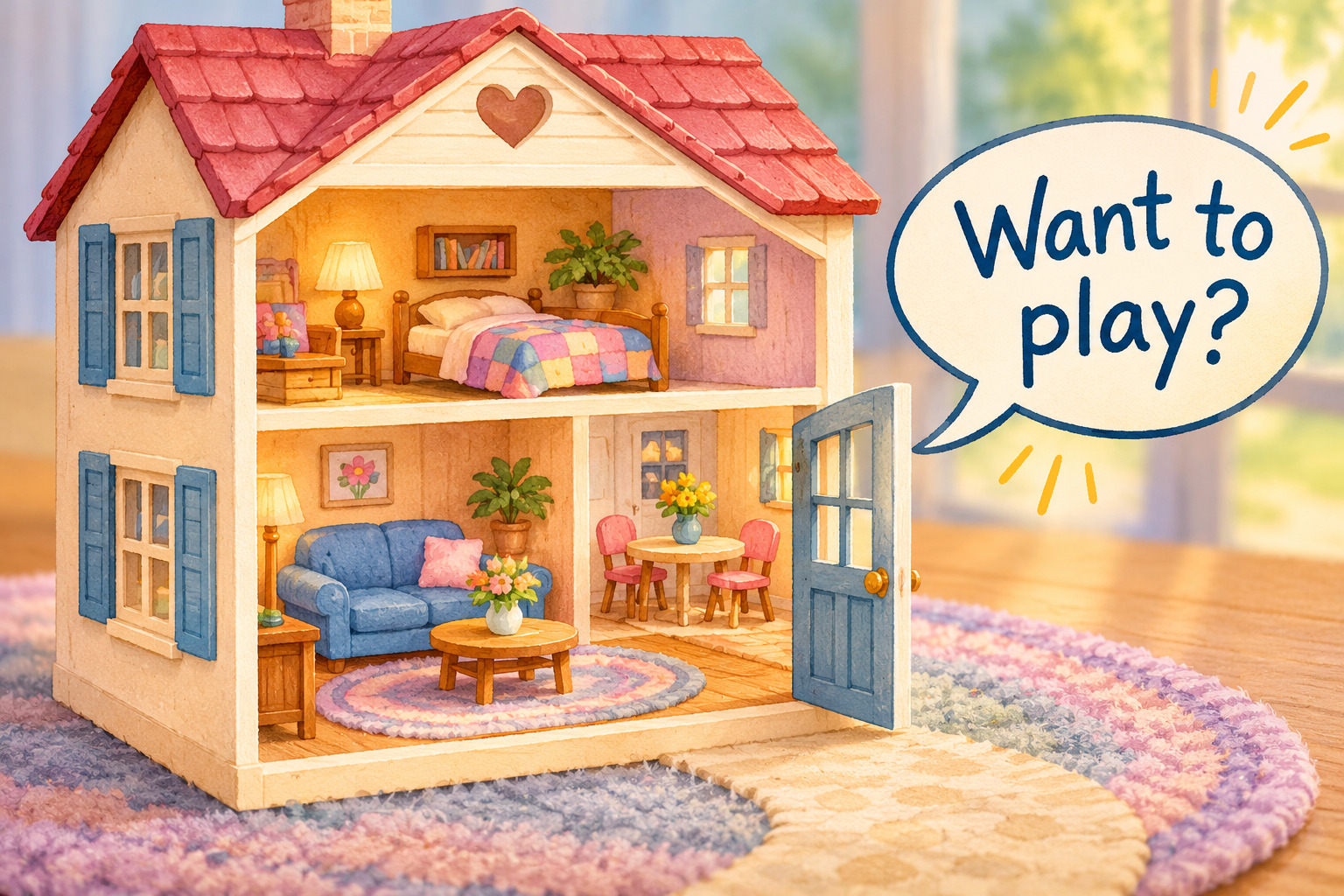
Katie was deeply absorbed in playing with the dollhouse. She was focused, engaged, and completely immersed in what she was doing.
Another child, Hannah, came into the room and cheerfully greeted her.
“Hi, Katie! Want to play today?”
Nothing.
No response. No acknowledgment. Not even a glance in Hannah’s direction.
To someone watching, this might have looked rude. Perhaps Katie didn’t like Hannah. Maybe she wasn’t interested in playing with her. Or maybe she simply didn’t have very good manners.
But none of those things was true.
Katie hadn’t registered that Hannah was speaking to her.
Why Missed Social Cues in Children Aren’t Always Intentional
For some children, particularly those with ADHD or challenges shifting attention, becoming deeply focused on an activity can make it difficult to notice what’s happening around them.
Their attention is so completely occupied that a friendly greeting or invitation may not register.
And here’s where things get interesting.
Hannah had done everything right. She approached another child, greeted her warmly, and invited her to play.
But without a response, Hannah might have walked away feeling rejected.
Meanwhile, Katie would have continued playing, completely unaware that someone had just offered her an opportunity to connect.
Two children. One missed interaction. And neither child doing anything intentionally wrong.
How Real-Time Social Coaching Changes the Outcome
Fortunately, I was there to bridge the moment.
I simply brought Hannah’s invitation to Katie’s attention.
And Katie’s response?
“Sure!”
Off she went to play.
No lecture about manners. No discussion about being a good friend. No need to insist that Katie apologize for ignoring someone.
Just a few seconds of coaching that turned a potentially missed opportunity into a successful social interaction.
This is one of the reasons I believe so strongly in coaching children right in the moments when social challenges happen.
Sometimes children already have the skills they need. They just need a little help recognizing when to use them.
Helping Kids Notice Opportunities for Friendship
When a child doesn’t respond to a greeting, invitation, or friendly comment, don’t automatically assume they’re being rude or deliberately ignoring someone.
Consider whether they actually noticed the interaction in the first place.
A simple prompt can make all the difference:
“Hey, did you hear? Hannah just asked if you’d like to play!”
And if you’re supporting the child who extended the invitation, remember that silence doesn’t always mean rejection. Sometimes the other person simply needs another chance to notice.
We spend a lot of time teaching children how to approach others, start conversations, and join activities. Those are important friendship skills.
But there’s another skill that’s just as valuable: recognizing when someone else is trying to connect with you.
And sometimes, all it takes is a nearby adult who recognizes the opportunity before it slips away.
Because sometimes kids don’t need help making the first move. They need help noticing that someone else already has.
Looking for More Social Coaching Support?
Social skills are often built through small, everyday interactions like these. Children may need help learning how to ask, wait, handle an answer they don’t like, read another person’s reaction, or figure out what to do next.
At the Peter Pan Center, I use real-time social coaching to help children practice these skills while they’re actually interacting with other people.
You can learn more about our Weekly Social Coaching Programs or browse the Peter Pan Coaching Library for practical resources you can use with the kids in your life.
My newest parent guide, Why Can’t My Child Make Friends?, also takes a practical look at the skills and challenges that can get in the way when friendships don’t come easily.
And if you’d like more real-life coaching observations and strategies like this one, you can join the Social Coaching Scoop email list for a new Scoop each week.