3 Tips on Managing Anxiety






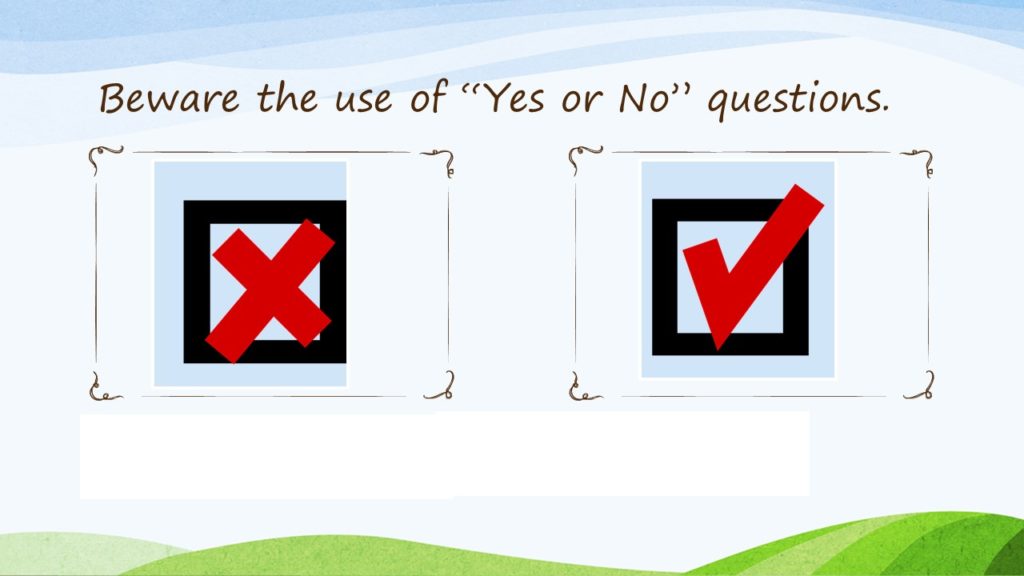
Asking our kids yes-or-no questions is a trap that all parents easily fall into. Sure, there are the easy kids who will get the inference that you want something done and do it. Then there are the kids that when offered these two options, take the one we don’t really want them to.
Here are some examples:
Do you want to get your homework started? No, not really.
Do you want to get your shoes on so we can go? Nope, I’d rather play my video game.
Do you want to help me carry in the groceries? No, thanks.
And now we are stuck in the trap. And then, when we grow frustrated with our child, we may actually be causing confusion. For kids who think along literal lines, they were really offered the choice, so why are you upset with me?
We ask yes-or-no questions mostly out of wanting to ask politely or to be kind. If you really need your child to get something done, you want to use directive language instead.
In five minutes, it will be time to start homework.
Let’s get your shoes on. It’s almost time to go.
I need some help carrying in the groceries. Thanks!
Now that you know, you’ll catch yourself asking yes-or-no questions and realize that you are caught in the trap. And now, you have the tool to extricate yourself. Happy parenting!
You don’t need to have a lot of friends to be happy. A couple of real friends is more important than the number of friends on your social media accounts. It’s good to have at least two friends in your life, in case one friend moves away, or one of your friends is busy or unavailable when you feel the need to be around a friend or want to hang out.
When you do encounter a potential new friend, you can tell if they are going to be a good friend and worth your time by using these friendship test tips.

Does your child exhibit a tendency to be bossy or demanding when playing with friends?
Let’s be honest, we would ALL would like to have our own way ALL the time, but that is just not the reality of living, playing, and working with other people. If your child is adamant about controlling play with peers or demanding things be done a certain way, they will quickly find themselves involved in conflicts, or even with no one to play with at all.
Here is a suggestion for coaching your child on this issue:
When you hear a bossy-sounding statement coming from your child, there is a simple intervention that usually works like magic. Coach your child to exchange the words, “You have to” for “How about we?” Explain that these words give each person the chance to share their ideas and it starts the process of problem-solving toward a mutual solution.
If you find your child continues to be rigid in their thinking and still wants to control the play, take it a step further and explain the probable negative outcome. It can be very powerful asking your child, “Do you want to have friends?” (Most kids will say, “Yes.”) Then say, “Let’s think about what’s not working and see what you might be able to do instead.”
Suggested Coaching Language:
“That sounded a little bossy. Let’s try the magic words and say, ‘How about we (fill in the blank)?’ instead.”
“How about doing it her way first, and your way next.”
“I don’t think that your friend’s ideas are being heard.”